

Lucerum Blog
Home > Blog

Looking for something specific?

Quantitative EEG in Depression: Predictors of Treatment Response
Quantitative EEG in Depression: Predictors of Treatment Response
Antidepressants and rTMS help roughly half of the patients who try them. Nobody knows which half in advance. That's a solvable problem — and quantitative EEG has quietly spent forty years solving it.
In this piece I give a broad overview of where the field actually is: the early generation of qEEG response predictors that have survived four decades of scrutiny and meta-analysis, the shift now underway toward network- and connectome-based markers that match the modern view of depression as a circuit-level disorder, and the emerging frontier of source-localized, neurotransmitter-informed EEG that could turn precision psychopharmacology from an aspiration into a workflow. I close on where things stand with the FDA and payers, and why the momentum is finally moving in the right direction.
qEEG is not a miracle. But the comparison is not qEEG-versus-perfection — it's versus-the-coin-flip. #qEEG, #Neuroscience, #BrainMapping, #Depression, #Psychiatry, #rTMS, #Antidepressants, #Psychopharmacology, #Connectomics
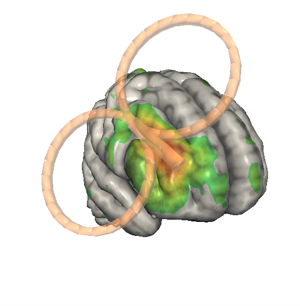
Personalizing TMS with qEEG guidance: Two Ways to Stop Guessing Where to Stimulate
Most TMS treatments still place the coil based on scalp landmarks — a pragmatic approach that has served the field well but leaves significant individual variability unaddressed. We now have better tools. Two data sources generate from EEG can tell you precisely where to aim and what to do when you get there: current source density (CSD) from qEEG and functional connectivity maps. Here's how each works, and how to combine them and where to find the precision tools needed for personalized TMS.

Psychedelic Therapy: Navigating the Neuroplastic Reconfiguration of the Self
At the heart of any psychiatric neuroplastogen is its ability to fundamentally alter the very sense of self, often permanently.


When the Brain Speaks Without Words: Decoding Tacit Knowledge and Intelligence Through Neural Connectivity
In neuroscience and cognitive science, we are often taught that what matters is what can be measured. But some forms of human expertise—like intuition, skill, or insight—have long eluded direct observation. We call this tacit knowledge: knowing how to act, without necessarily being able to say why.

From Mice to Humans: Cross-Species Neuroanalytics
Neuroscience research often starts in the lab, with animal models providing the first insights into how the brain works and how it reacts to new drugs or treatments. But the ultimate goal is to apply these findings to humans, improving diagnosis, treatment, and outcomes for neurological and psychiatric conditions. The bridge between preclinical research and clinical applications lies in cross-species neuroanalytics—the ability to analyze and compare neural data from animals and humans to uncover universal principles and actionable insights.