

Lucerum Blog
Home > Blog

Looking for something specific?
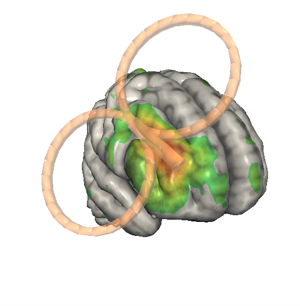
Personalizing TMS with qEEG guidance: Two Ways to Stop Guessing Where to Stimulate
Most TMS treatments still place the coil based on scalp landmarks — a pragmatic approach that has served the field well but leaves significant individual variability unaddressed. We now have better tools. Two data sources generate from EEG can tell you precisely where to aim and what to do when you get there: current source density (CSD) from qEEG and functional connectivity maps. Here's how each works, and how to combine them and where to find the precision tools needed for personalized TMS.
Eyes closed, eyes open qEEG — why you need both, and what the difference reveals for clinical practice
Eyes closed. Eyes open. One contrast that changes everything.
Clinicians using qEEG have long recorded resting-state EEG — but most still choose a single condition and move on. The eyes closed/eyes open (EC/EO) contrast is one of the most evidence-backed and underused paradigms in clinical qEEG, yielding biomarkers linked to Alzheimer's disease, Lewy body dementia, Parkinson's, ADHD, and depression that neither condition reveals alone. At the center of it is alpha reactivity — a dynamic, cholinergically sensitive index that tracks disease severity, predicts amyloid burden, and improves diagnostic classification. LucerumCarto computes EC/EO qEEG biomarkers automatically from your EEG data, giving clinicians the full contrast picture without manual calculation. Here's what the research shows — and why recording both conditions should be standard practice.

Psychedelic Therapy: Navigating the Neuroplastic Reconfiguration of the Self
At the heart of any psychiatric neuroplastogen is its ability to fundamentally alter the very sense of self, often permanently.


Neuroanalytics: Cutting Through the Hype and Misunderstandings
The allure of neuroanalytics is undeniable. The ability to measure, map, and analyze brain activity has sparked excitement across fields ranging from medicine and psychology to marketing and education. Promises abound: personalized mental health treatments, brain-computer interfaces, real-time performance optimization, and even unlocking the secrets of creativity. But with great promise often comes great hype—and neuroanalytics is no exception.

Brain Analytics in Cognitive Enhancement: Unlocking Human Potential
The pursuit of cognitive enhancement—improving learning, creativity, and performance—is no longer the stuff of science fiction. Advances in brain analytics are transforming this vision into reality, offering data-driven insights into how our brains function and how they can be optimized. By leveraging technologies like EEG, fNIRS, and advanced neuroimaging, researchers and innovators are uncovering the neural mechanisms behind peak performance and designing personalized interventions to unlock human potential.