

Resources
Meet us at the next conference or check out our latest projects
Home > Resources
From the Team
Meet us at the 2026 NYC Neuromodulation Conference
July 30 – August 3, 2026 | New York City, NY, USA | The City College of New York
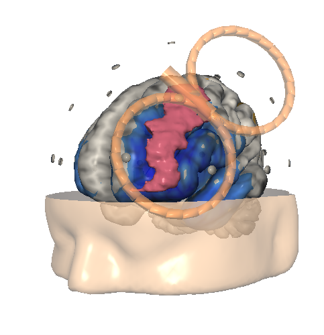
Stop at our booth for a demo of our EEG Neuroimaging and qEEG-guided precision TMS capabilities. Meet our partner vendors from EGI and Magstim for insights into how to integrate LucerumCarto endpoints into research and clinical workflows.
Meet Lucerum and EGI at the 6th Annual Psychedelic Therapeutics & Drug Development Conference
February 26-27, 2026 in New Orleans, LA
Precision Psychedelics are Heading to the Big Easy!
We are thrilled to announce that we are sponsoring the 6th Annual Psychedelic Therapeutics & Drug Development Conference this February 26-27, 2026, in New Orleans, LA, and the International Society for Research on Psychedelics conference (same week, same place).
As the industry gathers to advance the next generation of psychedelic medicine, we are leading the challenge in bringing end-to-end Pharmaco-EEG to the forefront of drug development.


Lucerum and EGI Join Forces to Advance EEG in Clinical Trials
Lucerum and EGI have partnered to deliver complete EEG solutions for clinical trial EEG with on site data collections and fast analytics.
HD-EEG modalities are fully integrated with Lucerum’s neuroanalytics platforms, spanning translational pharmaco-EEG, source-localized tomography, neuroplastogen connectomics, and AI-ready biomarker pipelines.

emka TECHNOLOGIES - Lucerum
Partnership to Streamline Preclinical Telemetry Data Analyses
emka TECHNOLOGIES is partnering with Lucerum, Inc. to deliver an integrated solution for preclinical telemetry data analytics, providing end-to-end workflows for high-quality data acquisition with emka systems to advanced multimodal signal analysis integrated with LucerumKey.

New Capability: Neurotransmitter Predictions
Relating Neural Oscillations to Neurotransmitter Dominance
To relate neurotransmitter or transporter contribution to changes in neural oscillations due to a drug or therapeutic intervention, we use models which predict the cortical power distribution of each EEG frequency band using normative PET or autoradiography-derived neurotransmitter cortical densities and normative EEG databases. We then apply dominance analyses to identify the neurotransmitters that contributed most to the fit (e.g., comparing before and after treatment). The differences between conditions highlight changes in NT dominance which provide powerful insight into the target.

