

Lucerum Blog
Home > Blog

Looking for something specific?

Meditation, Measured: How Brain Connectivity Is Reframing an Ancient Practice
Meditation research is increasingly focused on how large-scale brain networks support trainable attention, awareness, and emotion regulation, with the default-mode, frontoparietal-control, and salience networks emerging as central systems of interest. Resting-state mapping with fMRI and source-localized qEEG can track how these networks change with practice, opening a practical path to test whether individual network changes relate to meaningful cognitive and clinical outcomes.
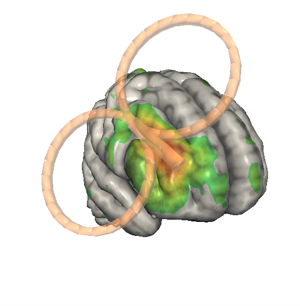
Personalizing TMS with qEEG guidance: Two Ways to Stop Guessing Where to Stimulate
Most TMS treatments still place the coil based on scalp landmarks — a pragmatic approach that has served the field well but leaves significant individual variability unaddressed. We now have better tools. Two data sources generate from EEG can tell you precisely where to aim and what to do when you get there: current source density (CSD) from qEEG and functional connectivity maps. Here's how each works, and how to combine them and where to find the precision tools needed for personalized TMS.
Eyes closed, eyes open qEEG — why you need both, and what the difference reveals for clinical practice
Eyes closed. Eyes open. One contrast that changes everything.
Clinicians using qEEG have long recorded resting-state EEG — but most still choose a single condition and move on. The eyes closed/eyes open (EC/EO) contrast is one of the most evidence-backed and underused paradigms in clinical qEEG, yielding biomarkers linked to Alzheimer's disease, Lewy body dementia, Parkinson's, ADHD, and depression that neither condition reveals alone. At the center of it is alpha reactivity — a dynamic, cholinergically sensitive index that tracks disease severity, predicts amyloid burden, and improves diagnostic classification. LucerumCarto computes EC/EO qEEG biomarkers automatically from your EEG data, giving clinicians the full contrast picture without manual calculation. Here's what the research shows — and why recording both conditions should be standard practice.

Decoding Brain States for Mental Wellness Apps
In an era where smartphones have become personal wellness companions, mental health apps are evolving from generic meditation guides to sophisticated platforms offering personalized support. At the heart of this transformation is neuroanalytics—the science of decoding brain activity to understand mental states. By leveraging neuroanalytics, developers are creating apps that adapt to individual neural patterns, promising a new level of personalized mental health care.

The Neuroanalytics Boom: Transforming Marketing, Sports, and Education
Neuroanalytics, once the domain of labs and clinics, is now reshaping industries far beyond neuroscience. From decoding consumer preferences to optimizing athletic performance and personalizing education, the ability to measure and analyze brain activity is unlocking new frontiers. The science of understanding how our brains work—and applying those insights—is quietly becoming a cornerstone of innovation in fields as diverse as marketing, sports science, and education.
