

Lucerum Blog
Home > Blog

Looking for something specific?
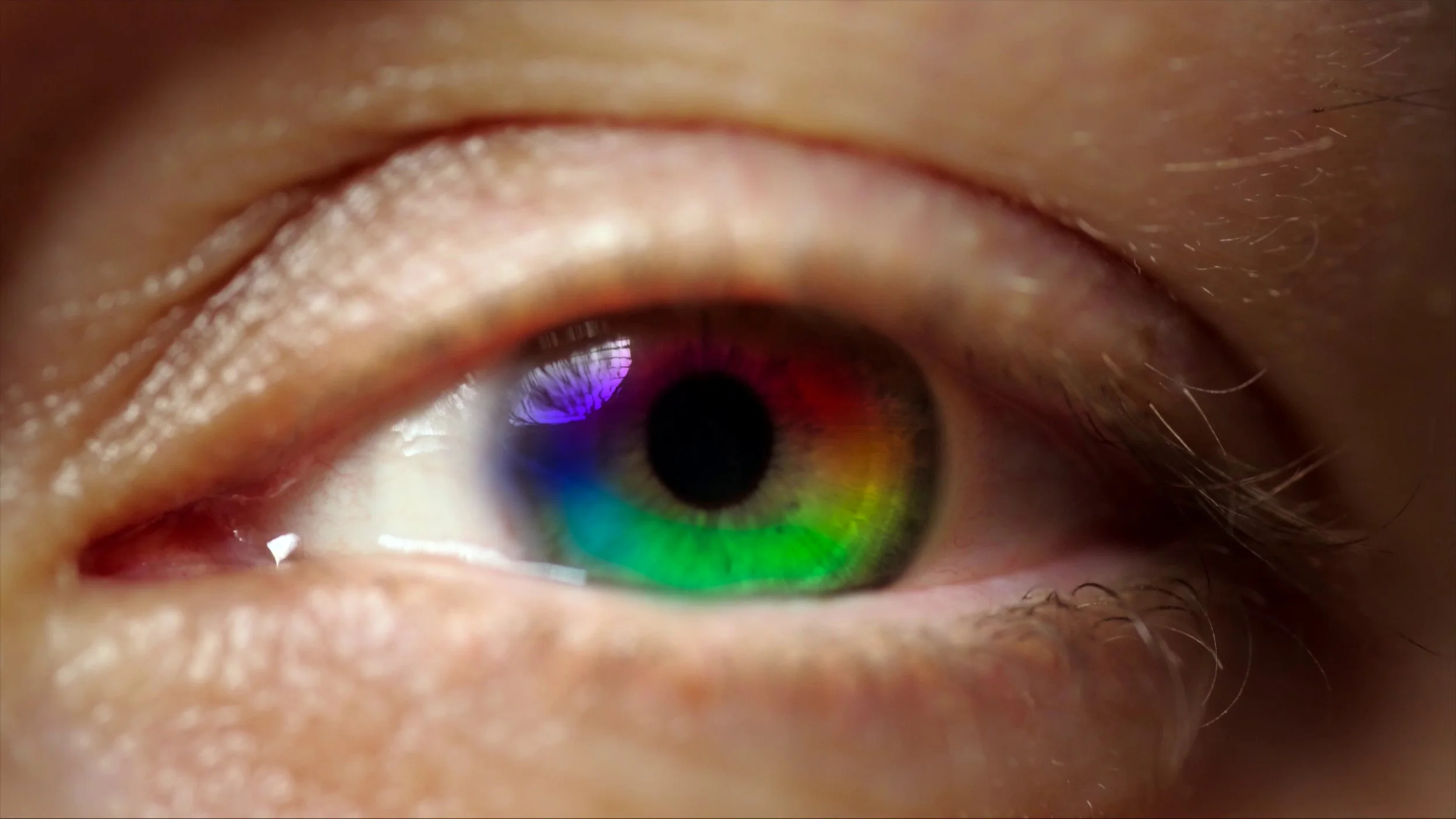
The Third Eye That Went Dark: How an Ancient Light Sensor Became the Body’s Clock, Mood Regulator, and Inner Psychedelic
🧠 The Third Eye That Went Dark
Deep in your brain sits a pea-sized gland that once looked out at the sky. In fish, amphibians, and reptiles, the pineal is literally a light sensor — some lizards still have a rudimentary third eye on top of their skull. In us, it went blind. But it didn't stop reacting to light.
Every night, light hitting your retina takes a long detour from the brain down the spinal cord, and back up — just to tell one small gland: it's dark now. The pineal answers with melatonin, the signal that sets sleep, seasonal reproduction, autonomic tone, and the hand-off from "fight or flight" to "rest and digest."
When this timing loop drifts, mental health follows. In OCD, the clock runs late and quiet — delayed melatonin, smaller pineal glands on MRI. In bipolar disorder, it runs hypersensitive — nighttime light suppresses melatonin twice as much as in healthy controls, even in unaffected relatives.
And here's the twist most people miss: the pineal also produces trace amounts of DMT and pinoline — chemical cousins of the two active ingredients in ayahuasca. Whatever their natural role, their relatives are now delivering rapid antidepressant effects in clinical trials of treatment-resistant depression.
An ancient third eye, blinded but not silenced, still runs a surprising amount of the show.
#Neuroscience #MentalHealth #Chronobiology #Psychedelics #Melatonin

When the Brain Speaks Without Words: Decoding Tacit Knowledge and Intelligence Through Neural Connectivity
In neuroscience and cognitive science, we are often taught that what matters is what can be measured. But some forms of human expertise—like intuition, skill, or insight—have long eluded direct observation. We call this tacit knowledge: knowing how to act, without necessarily being able to say why.

Why Chaos Theory Could Transform Mental Health Research
What if our understanding of the brain is missing something fundamental? For decades, researchers have tried to model brain function using approaches based on order and stability. The prevailing idea has been that a well-functioning brain works to maintain order by reducing chaos. But recent studies suggest this view may be overly simplistic.

Wired for Growth: How Brain Data is Shaping Childhood Interventions
The human brain is a marvel of evolution, adapting and rewiring itself throughout life. But the most dramatic transformations happen during childhood, a time when neural networks are forged and fine-tuned. For children with neurodevelopmental disorders—such as autism, ADHD, and dyslexia—these developmental changes often deviate from typical patterns, leading to challenges in learning, communication, and behavior.

